


Solar self-consumption: how to use the energy you generate inside the building
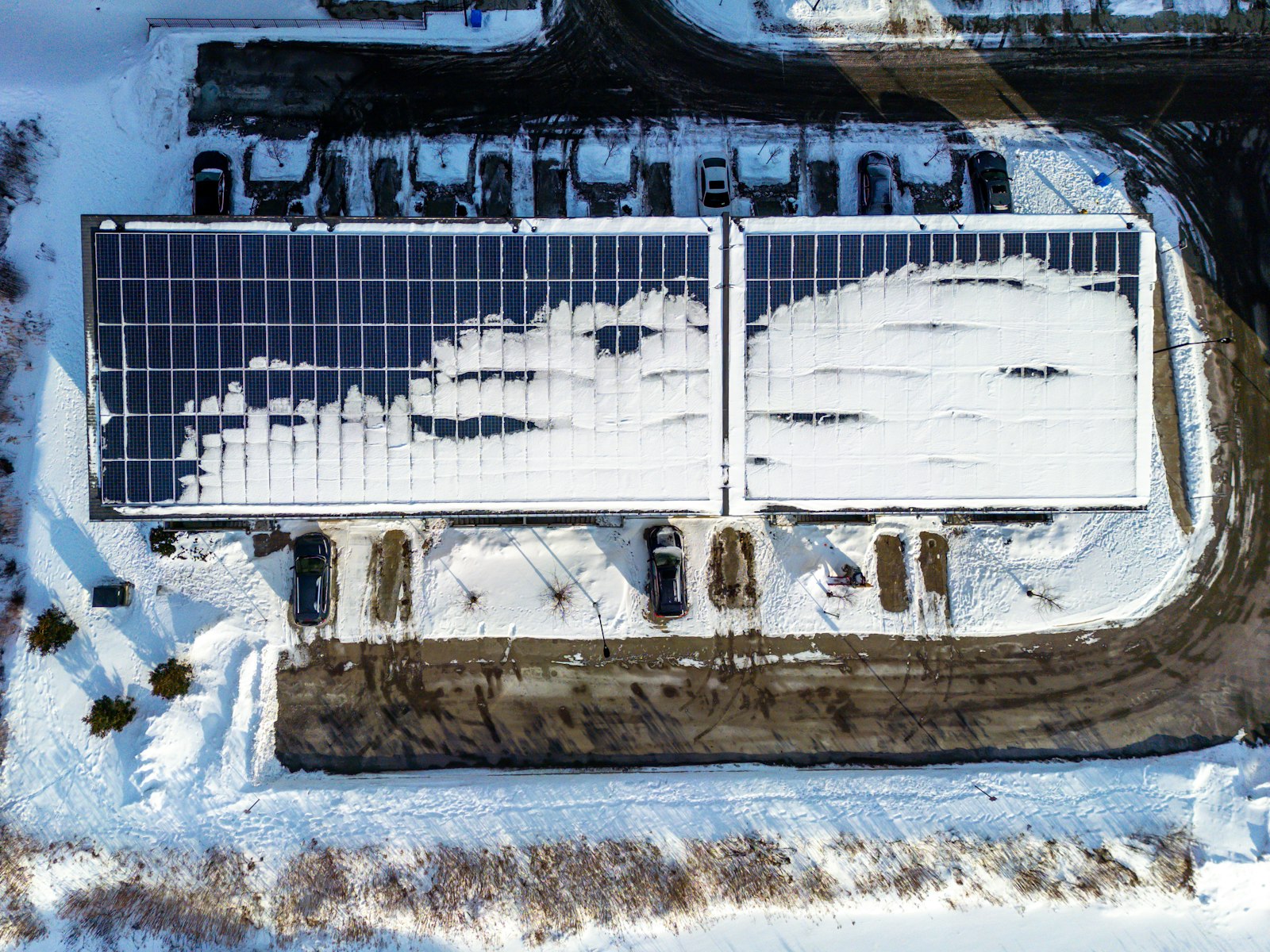
A solar plant on the roof does not automatically mean the building uses its own solar power. What matters is how much of the energy is consumed on site and how much flows out to the grid.
Electricity a building consumes itself replaces energy it would otherwise buy. Surplus is exported at a price that is usually well below the purchase price, and in some hours it can be zero or even negative. That is why, for commercial plants, the question is no longer just panel capacity but above all the self-consumption rate.
The catch is that the sun peaks at midday and on weekends, while a building runs to its own rhythm. An office is half empty on Saturday, a warehouse is quiet at night, a showroom peaks in the afternoon. Producing and consuming at the same moment does not happen on its own. This builds on the idea of managing solar, battery and building load together and on the groundwork of monitoring the plant itself.
What self-consumption is, and what it gets confused with
Self-consumption is the share of generated energy used inside the property, either immediately or via a battery. It is often mixed up with similar-sounding terms.
| Term | What it means | Watch out for |
|---|---|---|
| Self-consumption rate | The percentage of generation consumed on site | A high rate does not mean the plant covers the building's whole demand |
| Self-sufficiency | The percentage of demand covered by own generation | A different number from self-consumption; track both separately |
| Grid export | Energy the building did not use and sent out | Terms and prices depend on your supplier contract and grid operator rules |
| Zero export | Limiting output so nothing is fed to the grid | Protects against export, but the unused energy is simply never produced |
Rule of thumb: Self-consumption and self-sufficiency are not the same thing. A plant can have an excellent self-consumption rate and still cover only a small part of the building’s demand, and the other way round.
How high a rate is realistic
The figure depends on plant size relative to demand, on operating hours and on whether there is a battery. Industry sources agree only roughly: without a battery, commercial self-consumption is often somewhere around half of generation, and with a well-sized battery and smart control it can move noticeably higher. Claims of “almost 100%” tend to be marketing. For a specific building, the only reliable basis is a measured load profile: how much the property draws in each hour of the day and across the seasons.
Three ways to raise self-consumption
1. Look at what actually happens first
Without data you can only guess. The foundation is one view of generation, consumption and export by the hour or quarter hour. It quickly shows how much energy leaves at midday, when the building draws from the grid, and which devices drive demand. The causes are often surprisingly simple, such as consumption outside working hours that does not fit the sunny hours.
2. Move consumption into the generation window
Part of the load can be shifted without harming operations. Typical candidates are devices with some inertia or timing tolerance:
- Water heating and storage tanks – heating during surplus hours instead of early morning or evening.
- Pre-cooling or pre-heating spaces – using the thermal mass of the building so the system absorbs the midday surplus and runs lighter the rest of the day.
- EV and forklift charging – starting by generation, not by arrival time.
- Compressors, pumps, cold rooms – where the process allows it.
- Work routines in a warehouse or workshop – equipment charging, washing, drying and similar tasks.
The key is not to put anything at risk: people’s comfort and conditions for stored goods come first. Control is therefore set up with limits and always with a manual override.
3. Store the surplus in a battery
A battery moves midday generation into the evening and morning. It helps most where demand continues outside sunny hours. It is not a universal answer: its size and operating mode should come from real data, otherwise it risks being either too small or barely used.
Which approach fits which property
| Property type | Typical load profile | What usually helps most |
|---|---|---|
| Office | Daytime demand, weak weekends | Air-conditioning control, car charging, watching weekend export |
| Retail unit and showroom | Afternoon and evening peak, lighting | A battery, timing of cooling and water heating |
| Warehouse | Steady base load, cooling, equipment charging | Shifting charging and cooling towards midday |
| Workshop and studio | Batch processes, fluctuating demand | Load control driven by generation, possibly a smaller battery |
Watch out: Do not switch off loads just for a nice-looking number. The goal is cheaper operation while keeping comfort and the function of the property, not a high percentage for its own sake.
How to proceed in practice
- Measure the current state. Generation, consumption and export by the hour for at least a few weeks, ideally across a change of season.
- Find the biggest surpluses and the biggest grid draws. That is where the room is.
- Pick loads that can be timed. Start with what is easiest and least risky.
- Set rules and limits. What may be shifted, until when, with what priority, and what never.
- Evaluate the result. Compare self-consumption and self-sufficiency before and after.
- Only then consider a battery or an extension of it, with data instead of estimates.
Checklist: what to have ready for self-consumption
- Metering of generation, consumption and export – preferably in quarter-hour steps.
- A view of both self-consumption and self-sufficiency – the two numbers separately.
- A list of loads that can be timed – with limits and priorities.
- Control rules with manual override – comfort and operations come first.
- Alerts for lost generation or metering – lost data means lost visibility.
- Confirmed terms with supplier and grid operator – export, output limits, sharing rules.
- An evaluation after the season – summer and winter differ.
- An asset register – inverter, battery, meters and control devices.
FAQ
Is it better to raise self-consumption by control or by a battery?
Starting with load control usually pays off, because it is cheaper and quickly shows how much room there is. The battery then handles what cannot be shifted. The right balance comes from the property’s data.
Can self-consumption be improved on an existing plant?
Often yes. If the inverter or meter exposes data and at least some loads can be controlled, you can proceed without replacing the plant. It depends on the specific equipment.
What if the building uses little at midday?
Then the surplus has to be stored or the load moved. It may also be worth checking whether the plant is sized correctly for the property.
Can I share surplus with another site or building?
Sharing options are still evolving in the Czech Republic and depend on supplier and grid operator terms. Always confirm them with those parties before planning.
Is tracking self-consumption alone enough?
No. Also track self-sufficiency, energy prices over time and the state of the equipment. A single number without context can lead to wrong conclusions.
From sensor to real action
A chart does not raise self-consumption; rules and actions do. Data from the plant, battery, meters and loads therefore belongs in one place, the INTECHI client zone, where generation, consumption and export sit next to the building’s other measurements. Deviations, such as lost generation or unusual night-time demand, go as alerts to whoever should handle them, and with one step become a service request in INTECHI Digital Management. Load control is introduced gradually, from a single device to the whole property, and every device is registered, so it is clear what is installed and where. More about the technology is on the Smart technologies page on intechi.cz.
How INTECHI approaches it
INTECHI TECHNOLOGY knows photovoltaics and connects them with building monitoring and control: generation, self-consumption, battery and alerts live in one place, in one client zone. We use the same technology as INTECHI on intechi.cz. If you want to know how much of your solar power is really used and where there is room to improve, get in touch.